Restorative Justice: An Avenue for Healing the “Unhealable”
While justice in the legal system is punishment, justice in restorative practices is healing. This understanding brought us, Anushah, a survivor and advocate in New Mexico, and Ana, a Colombian “possibilitarian” of restorative processes, together in the middle of a pandemic. Along with Julian, Ana´s co-facilitator, we began a process of healing and repair from sexual harm, which needed to be co-created and co-imagined, because the essence of a restorative justice process is unreplicable; it is never one-size-fits all. Why? Because it is based on the survivors’ needs, which vary.
A restorative justice process can address all kinds of harm. There can be repair within family relationships, intimate partnerships, and even relationships in which contact doesn’t exist anymore. This is a way of addressing harm that is never rushed and honors the spaciousness to metabolize what needs to be healed, understood, and shared. There is also no statute of limitations in this framework. People can process harm from any period of time. In Anushah’s case, the harm occurred 10 years prior, and she was no longer in touch with the person who committed the harm.
Restorative justice is a new paradigm to address harm, which may contradict punitive beliefs of what justice is. People may think of justice as exposing the people who have caused harm, so that they can inflict pain and punishment. However, in Anushah´s process, we signed a confidentiality agreement in order to create a safe enough space for accountability to become a possibility. This allows the parties involved to admit harm without the fear of legal repercussion.
There are a few important touch stones in a restorative justice process that are crucial to limiting harm for everyone involved: no one is forced to participate, anyone can leave or discontinue their involvement at any time, consent is continuous, and the process is centered on accountability.
If it is not voluntary, it is not restorative.
Throughout the process, facilitators aim to restore consent and agency which are lost when harm occurs. In our process, Anushah was constantly asking the facilitators, “What do we do next?” and the facilitators were constantly responding with, “What do you want to do next?” Anushah thought there was a prescribed, step-by-step method, but the process is based on co-creation.
Exploring what accountability means to each survivor is crucial to the process.
For Anushah, accountability meant an acknowledgement of the harm and an apology to help undercut the gaslighting and victim-blaming she experienced from the perpetrator, her community, and the legal system. It was also important for her to know that the person who committed the harm understood why they did it, so they could break the cycle of harm.
For other survivors, accountability can include financial reparations, a commitment to not repeat harm, or nothing at all. Sometimes survivors just want to share, be heard, and be believed. A loving, witnessing presence is sometimes the glue needed for the broken pieces – not only for the person who experienced the harm but also for the person who commits the harm.
In working with the person who committed this harm, the facilitators allowed for the messiness of the human experience to exist in their co-created space. They built rapport over the course of several months. Anushah was not present for this person’s process, which ensured they could address the context of the harm and explore their understanding around consent, patriarchy, and gender roles. The person who committed the harm was given non-judgmental space to grapple with the fact that they had hurt somebody, which was crucial for them to be accountable and meet Anushah’s needs. The facilitators also compassionately reminded them that, “We are never the worst thing that we have done, nor the worst thing that has happened to us.” Ultimately, they provided a letter acknowledging the harm, sharing what they had learned in the process and the next steps in their healing journey.
“We are never the worst thing that we have done, nor the worst thing that has happened to us.”
For Ana, it was an honor to hold space for the “yes, and” of life and confirming that healing is a somatic experience.
For Anushah, it was magic to witness the creation of a process that didn’t previously exist, and the ripple effect of healing that was thought to be impossible.
If you are a survivor interested in a restorative justice process, connect with us.
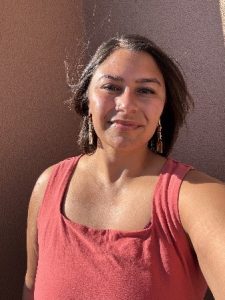
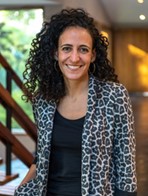
Anushah Jiwani Ana María Hurtado
jiwanianushah@gmail.com
ana@anahurtado.co
To learn more about our process, check out our story:
OAESVs Fall Seasonal Training Series Online Course
Both/And Podcast Part 1 & Part 2
This publication was supported by Rape Crisis Funding awarded by the Ohio Governor’s office, administered by the Ohio Attorney General’s Office. The opinions, findings, conclusion, and recommendations expressed are those of the authors and do not necessarily reflect the views of the Governor or the Ohio Attorney General’s Office.